
Lead gen companies pitch asphalt contractors constantly. The offer usually sounds the same: a list of homeowners in your area who expressed interest, low upfront cost, pay only if the leads convert. It is appealing, especially when the phone is quiet and the season is slow.
But some of those pitches carry a serious legal problem buried inside them. And if you say yes without asking the right questions first, your business name gets attached to it.
Here is what you need to know before you buy leads from anyone running outbound text or call campaigns.
What Happened in My Inbox This Week
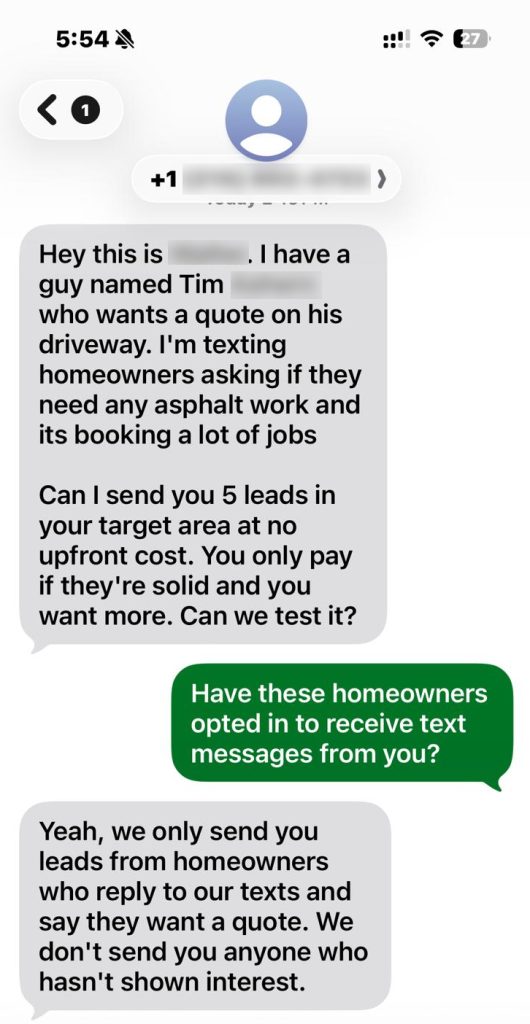
A number I did not recognize texted me this week. Said he had a homeowner ready for a driveway quote and was running outbound texts to homeowners across the area asking if they needed asphalt work. Offered to send five free leads with no upfront cost.
Sounds reasonable. So I asked one question: have these homeowners opted in to receive text messages from you?
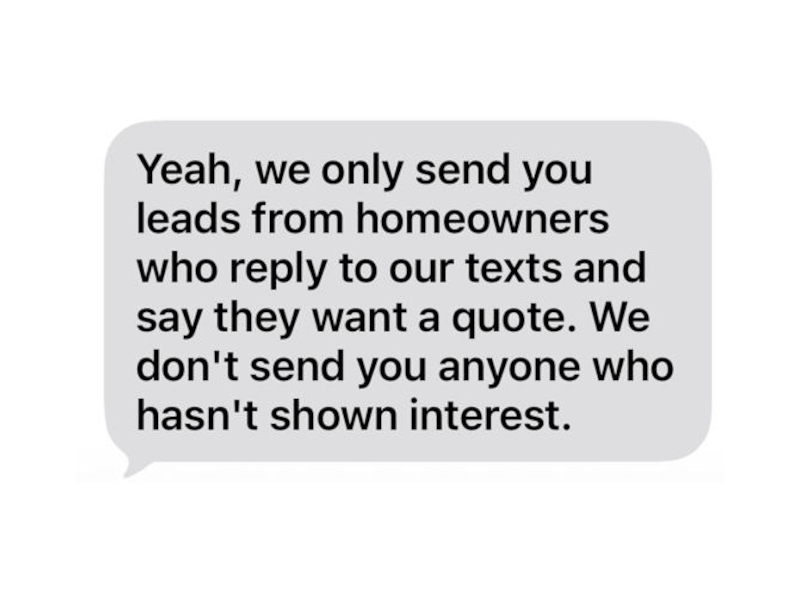
The answer? We only send you leads from people who replied to our texts and said they want a quote.
That is not opt-in. Replying to a cold text is not consent. And that distinction is the entire problem.
What Is TCPA and Why It Applies to You
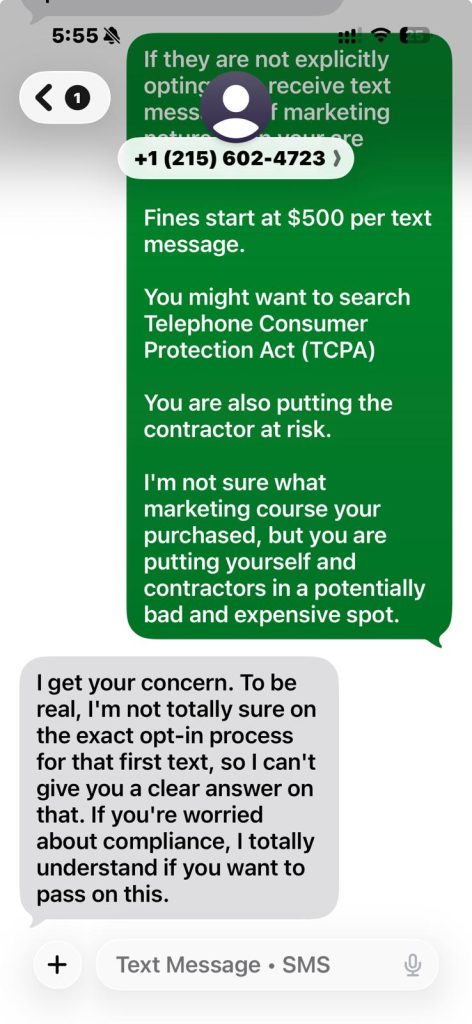
The Telephone Consumer Protection Act — TCPA — is a federal law enforced by the FCC. It prohibits sending unsolicited marketing text messages to consumers without their prior express written consent. Not implied consent. Not a reply to a cold message. Written. Prior. Explicit.
The fine for a single unsolicited text starts at $500. If the violation is found to be willful — meaning the sender knew the rules and ignored them — that climbs to $1,500. Per message.
When a lead gen company is blasting outbound texts to homeowners across multiple markets, those numbers add up fast.
Where Your Business Comes In
Here is the part most contractors do not know. If you hire a lead gen company that is violating TCPA, you can be pulled into that liability — even if you never sent a single text yourself.
The law looks at who benefited from the outreach, not just who pushed the send button. If your company name is attached to the jobs being pitched, you are on the short list of interested parties when a complaint gets filed.
The marketer pitching you is not the one with a business to protect. You are.
Four Questions to Ask Before You Buy Leads
Before you say yes to anyone running outbound text or call campaigns on your behalf, get clear answers to these four questions:
• How did you collect this contact information? A legitimate operation can explain their source clearly. Vague answers are a red flag.
• Did these people explicitly opt in to receive marketing messages? Replying to a cold text is not opt-in. Look for a real consent process.
• Can you show me the consent documentation? Any company operating cleanly should be able to produce records. If they hesitate, walk.
• If there is a compliance complaint, who is responsible? Get this in writing. A company confident in their process will not balk at putting it on paper.
If they cannot answer all four questions clearly, that is your answer.
What Legitimate Lead Generation Looks Like
Not every lead gen company is running a dirty operation. Plenty of them build compliant systems — inbound leads, proper consent flows, documented opt-ins. The pitch might still look similar on the surface. The difference shows up when you ask the hard questions.
A company that is operating cleanly will not flinch at the four questions above. They will have answers ready. A company cutting corners will deflect, reframe, or suddenly get vague about their process.
Speed of response and a low upfront cost are not signals of quality. Clean documentation is.
The Bottom Line
The next time someone pitches you paving leads generated through outbound texts or calls, slow down before you say yes. A good-sounding offer is not worth the exposure if the company behind it is not operating inside the law.
Ask the four questions. Get clear answers. And if anything about the process feels off — it probably is.